
A first-of-its-kind summer program where mixed teams of 8th–12th graders compete to solve real-world problems with AI.
Real-World AI Research Through Collaborative, Cross-Grade Teams
Students (grades 8–12) work in structured, role-based teams to solve real-world
problems (e.g., healthcare, climate, finance) using AI. Each student takes on a distinct
role—team captain, technical lead, or impact analyst—mirroring real research labs
and ensuring every participant contributes meaningfully
Intensive, Mentor-Led AI Learning + Project Development
Over two full-time weeks, students learn core AI concepts (Python, machine learning,
ethics) and immediately apply them to build a working AI solution. Supported by
PhD-level mentors and graduate instructors, teams progress from problem definition
to model development, deployment, and research writing.
Culminating Conference + Tangible College-Ready Deliverables
The program concludes with a live, judged mini-conference where teams present their
work. Students leave with high-impact outputs—including a research paper, deployed AI
application, presentation recording, and certificate—designed to strengthen college
applications and showcase real-world AI experience.
The AI Impact Challenge is a 2-week, full-day, in-person program at the Inspirit AI Hub in Palo Alto.
Cross-grade teams of 4–5 students (grades 8–12) are formed on Day 1 and immediately assigned a
real-world problem domain — healthcare, STEM , law, finance. Every student owns a distinct role.
Every role is essential. Every role is on stage at the final mini-conference.
Inspirit AI Hub 335 Bryant Street, Palo Alto, CA 94301
8th-12th Grade Students
Weekdays, July 20-31, 9am-4pm
20-30 Total Students Teams of 4-5
In your team, design a socially impactful AI project with the goal of solving real-world problems in the domains below.
Every student is assigned one of three roles on their team. Roles are chosen at the end of Day 1 through a
structured team-building activity, with instructor guidance. No two students do the same work — and every role is
required for the team’s conference presentation to succeed.
Best fit: 11th – 12th grade
Owns the team’s research direction and final pitch. Acts as principal investigator — sets the research question, coordinates teammates, mentors younger students, and delivers the full project summary to judges.
Best fit: 9th – 11th grade
Owns the model. Selects the dataset, builds and trains the ML model, runs experiments, and deploys a working web application. Works directly with Inspirit’s grad student instructors during technical sessions. Presents the live demo at the mini-conference.
Best fit: 8th – 10th grade
Owns the real-world case. Researches why the problem matters, who it affects, what the stakes are, and how the team’s solution changes outcomes. Investigates ethics and limitations. Opens the team’s conference presentation — the first voice judges hear.
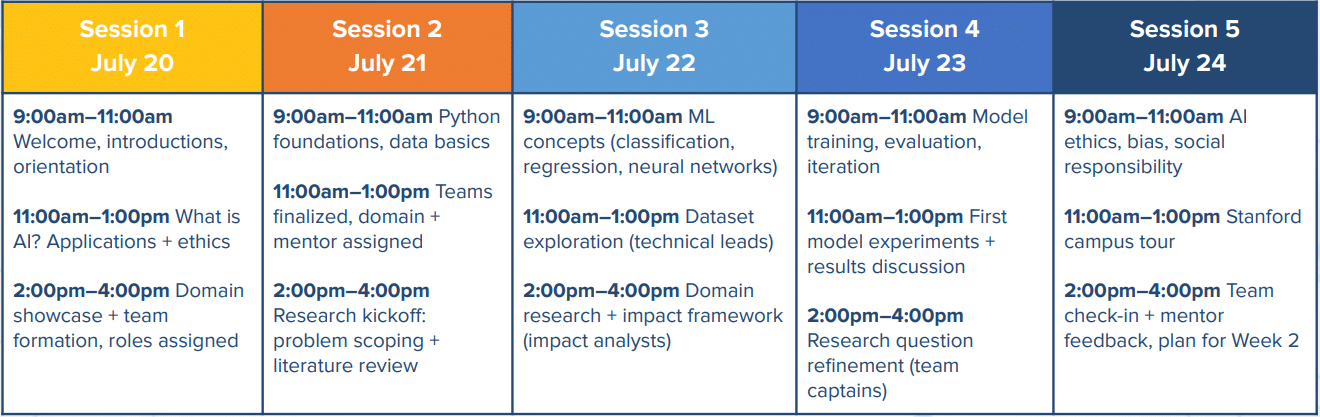
Week 1 is focused on building a strong foundation in artificial intelligence while forming teams and defining each project’s direction. Students learn core concepts in AI, Python, and machine learning, then apply them by selecting a real-world problem, exploring relevant datasets, and beginning early model experimentation. By the end of the week, each team has a clear research question, defined roles, and an initial technical and impact framework to guide their work in Week 2.
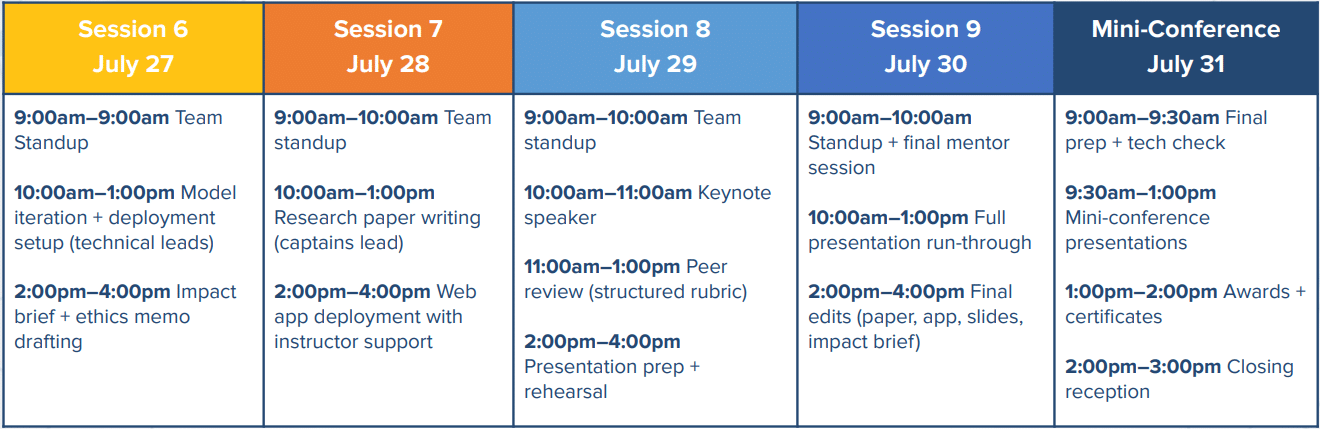
Week 2 focuses on building, refining, and presenting each team’s AI project. Students iterate on their models, deploy a working web application, and develop a full research paper alongside an impact brief and ethics analysis. The week culminates in a live, judged mini-conference where teams present their work, demonstrating both their technical solution and its real-world significance.
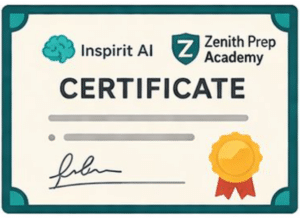
Co-Authored Research Paper: A full research paper (introduction, methodology, results, discussion) developed with mentor guidance, suitable for submission to high school research journals.
Deployed AI Web Application: A live, publicly accessible web app showcasing the team’s trained AI model—something students can link in portfolios and college applications.
Impact Brief & Ethics Memo: A structured write-up explaining the real-world importance of the project, who it affects, and key ethical considerations.
Award Categories

→ Plus, gain access to the Inspirit AI Learning Portal:
Continued access to additional AI projects, research talks, and college prep resources after the program ends.
400+ Inspirit AI Scholars have been accepted to undergraduate degrees at Harvard, Yale, Princeton, Stanford, MIT, UC Berkeley, Oxford, and Cambridge, among many other top universities worldwide. 150+ alumni accepted to Ivy League schools in the past 2 years.
A snapshot of where Class of 2028 alumni have been admitted: